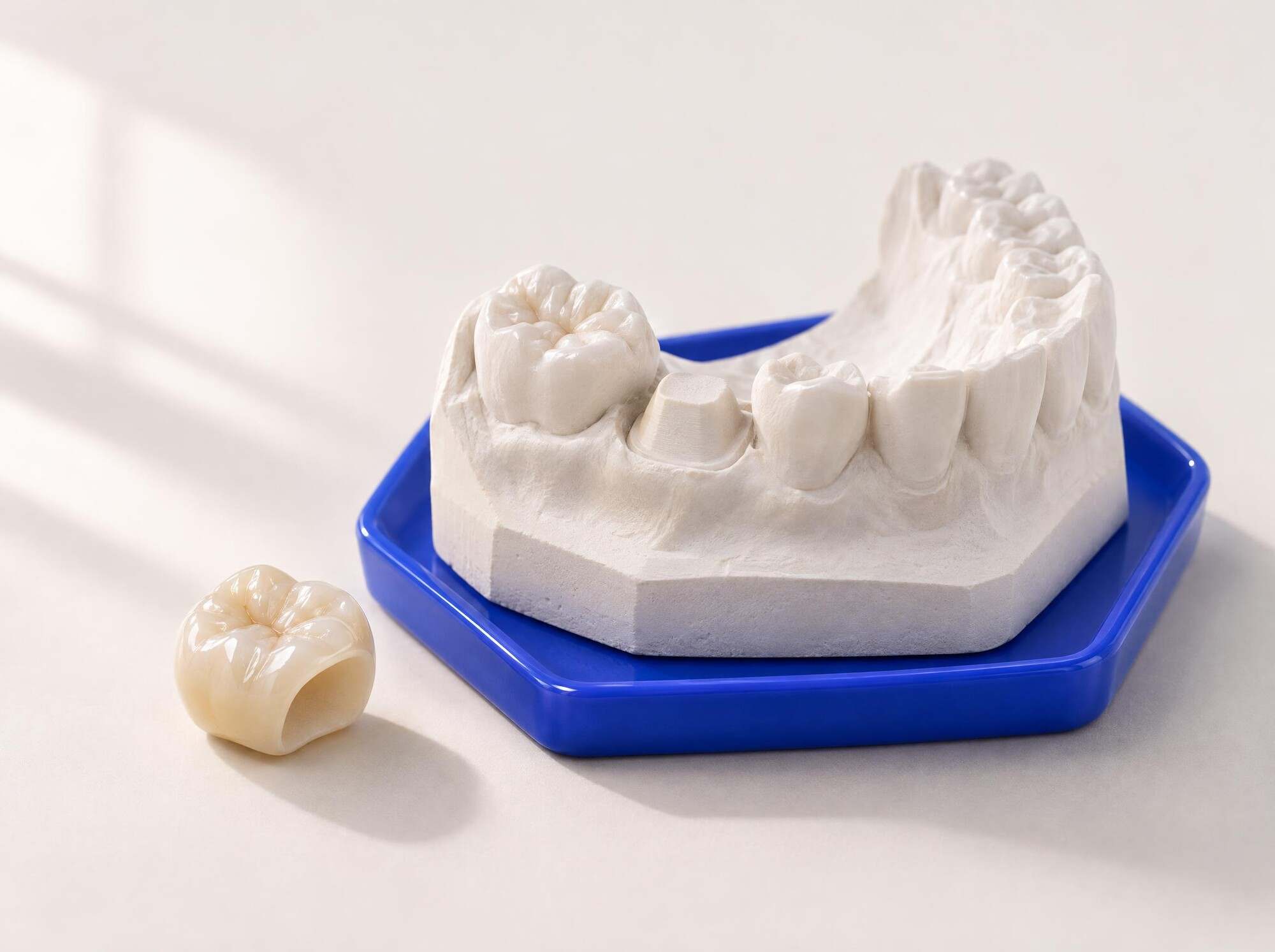
Who dental crowns are for
A crown is commonly recommended for a tooth with a large or failing filling, a cracked or broken tooth, a tooth that has had a root canal, or a tooth that is badly worn.
Crowns are also used to improve the shape of a tooth and to restore a dental implant.
How it works, step by step
- We examine the tooth, take any X-rays that are needed and confirm that a crown is the right choice.
- We numb the tooth and shape it so the crown will fit over it.
- We take an impression of the prepared tooth and your bite.
- We place a temporary crown to protect the tooth while your permanent crown is made.
- At a second visit we check the fit and color of the permanent crown, adjust it and cement it in place.
What to expect at our Hanford office
A crown typically takes two visits. You are numb for the preparation visit, and the tooth may be a little sensitive while the temporary crown is in place. The second visit is shorter and often does not require much anesthetic.
Crowns can be made of porcelain, metal or a combination of both. Porcelain is the option most patients prefer because it closely matches natural teeth. We will recommend a material based on where the tooth is and how much force it takes.
Benefits
- Holds a cracked or weakened tooth together
- Restores full chewing function
- Porcelain crowns are matched to the color of your teeth
- Protects a tooth after root canal treatment
Aftercare
While you have a temporary crown, avoid sticky or very hard foods on that side and floss by sliding the floss out sideways.
Once the permanent crown is in, brush and floss it like a natural tooth. The crown itself cannot decay, but the tooth underneath can, especially at the edge near the gum.
Cost and insurance
The cost of a crown depends on the material and the condition of the tooth. Some teeth need a buildup first to support the crown. You will receive an estimate before we start.
Dental plans often cover a portion of a crown when it is needed to restore a damaged tooth. Coverage varies, so we review your benefits with you.
You can pay your bill online, and our new patient page explains what to bring to your first visit.

Your dentist: Daniel W. Unzicker, DDS
Dr. Daniel Unzicker, DDS, provides dental crowns at our Hanford office. He is a general dentist who was born and raised in Hanford, graduated with high honors from the University of the Pacific School of Dentistry in 2012 and completed a general practice residency at Los Angeles County + USC Medical Center.
Page last updated November 10, 2026. This page is general information, not a diagnosis or treatment recommendation. If you have significant facial swelling, difficulty breathing or swallowing, uncontrolled bleeding, or trauma to the head or jaw, call 911 or go to the nearest emergency room.