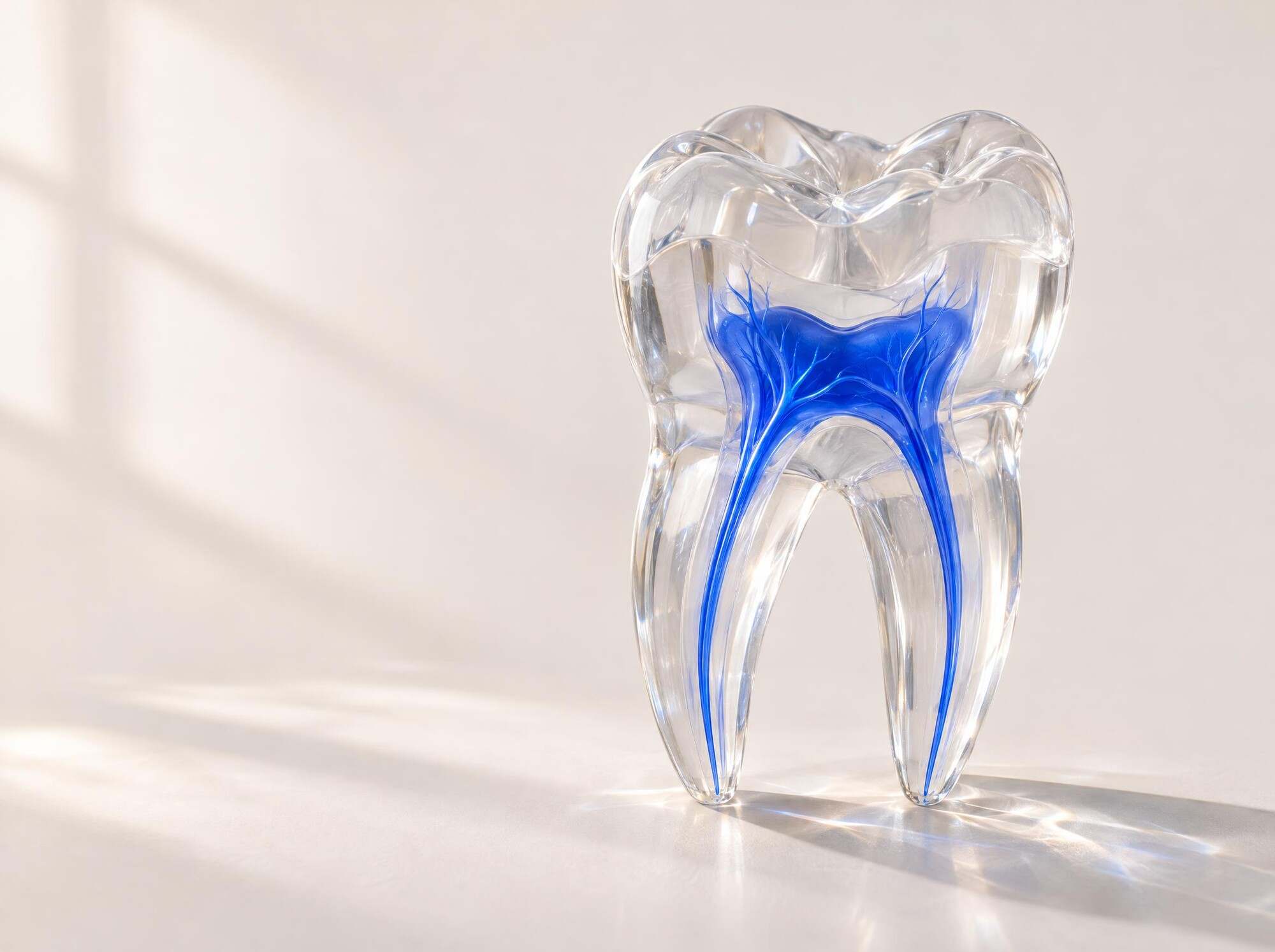
Who root canal treatment is for
Root canal treatment is needed when bacteria reach the pulp, usually through a deep cavity or a crack. Common signs include a severe or lingering toothache, pain when biting, prolonged sensitivity to hot or cold, a pimple on the gum, or swelling.
Sometimes there are no symptoms and the infection is found on an X-ray. Left untreated, the infection can form an abscess, damage the jawbone and affect your overall health.
How it works, step by step
- We take X-rays and test the tooth to confirm the diagnosis.
- We numb the tooth thoroughly and isolate it to keep it clean and dry.
- We make a small opening and remove the infected or inflamed pulp.
- We clean, shape and disinfect the canals inside the roots.
- We fill and seal the canals, then close the opening with a filling.
- In most cases the tooth is later covered with a crown to protect it.
What to expect at our Hanford office
Root canals have a reputation they do not deserve. With modern anesthetic, the procedure typically feels similar to having a filling placed, only longer. For most patients, the treatment is what relieves the pain, not what causes it.
Dr. Daniel Unzicker is a general dentist who provides root canal treatment. Some teeth, such as those with unusually curved or blocked canals or teeth that have been treated before, are better handled by an endodontist. If that is the case for your tooth, we will tell you and help arrange the referral.
Benefits
- Relieves the pain of an infected tooth
- Saves your natural tooth instead of removing it
- Stops infection from spreading to the bone
- Keeps your bite and neighboring teeth stable
Aftercare
The tooth and surrounding gum may be tender for a few days. Over-the-counter pain relievers are usually enough, and we will give you specific instructions.
Avoid chewing hard foods on the tooth until its final restoration is placed. A root canal treated tooth without a crown is more likely to fracture.
Cost and insurance
Cost depends on which tooth is involved, since molars have more canals than front teeth, and on the restoration needed afterward.
Dental plans often cover part of root canal treatment. We will give you a written estimate and review your benefits before treatment.
The alternative to a root canal is extraction, usually followed by replacing the tooth with a bridge, implant or partial denture. We will go over the options with you.
You can pay your bill online, and our new patient page explains what to bring to your first visit.

Your dentist: Daniel W. Unzicker, DDS
Dr. Daniel Unzicker, DDS, provides root canal treatment at our Hanford office. He is a general dentist who was born and raised in Hanford, graduated with high honors from the University of the Pacific School of Dentistry in 2012 and completed a general practice residency at Los Angeles County + USC Medical Center.
Page last updated November 10, 2026. This page is general information, not a diagnosis or treatment recommendation. If you have significant facial swelling, difficulty breathing or swallowing, uncontrolled bleeding, or trauma to the head or jaw, call 911 or go to the nearest emergency room.